Rouvalis Flowers & Gardens | Boston & Winchester Flower Delivery & Boutique

Locally Designed. Hand Delivered. Boston & Winchester’s Trusted Flower Shops.

The makings of a Garden Party!

Sean MurphyComment

Today we put together groupings of jade colored glass containers in unique shapes and bright teal votive containers to be placed around the home and out on the back patio. Floral included in the pieces exuded fresh spring colors and fragrances! 

Above we have the stem choices, laid out and ready to be cut and arranged - and complete to the right!

Large and full centerpieces were created to be placed on dining tables and the kitchen island. 

And lastly, sweet miniature hydrangea plants and ivy were potted into mercury glass vessels to garnish the garden. 

Bringing the garden inside with arrangements!

Sean MurphyComment

It's late spring, early summer. Your garden is in full bloom, filled with an array of colored flowers. This is the perfect time to create a beautiful bouquet from the all the work you have put into the garden, so you can enjoy the sights and smells of the garden inside your home as well as outside it.

As soon as the plants in the garden begin flowering, begin cutting. I know that it only takes one gusty wind or heavy summer rain to destroy the blooms. Cutting guarantees that at least some of the flowers will be spared this cruel fate.

There is another reason to cut: It encourages more flowering on my plants throughout the summer months and even into early fall. Periodic cutting performs the same function as deadheading—promoting more blooms by delaying the onset of fruit.

Of course, the main reason to cut is for the tremendous satisfaction it gives seeing your garden-grown flowers sitting pretty in a vase on the kitchen table. The number of flowers needed depends on the size of the vase used. In order to avoid cutting too many, you can add foliage to the arrangement. Use a branch or two from a tree or shrub, or some groundcover with assorted grasses. These materials help me create bouquets of various sizes and shapes.

Also  make sure to pick and condition flowers properly, so they'll have an extended vase life. There are many tricks in the cut-flower trade for creating long-lasting displays.

When to Cut

Early morning is the ideal time to cut fresh flowers. The flowers have had the benefit of cool night air and morning dew. Their stems are filled with water and carbohydrates and so are firm to the touch. As the day warms up, flowers gradually dehydrate. Midday is the least auspicious time to cut, as transpiration rates are at a peak and plants are rapidly losing moisture through their leaves. Flowers become limp; their necks become bent. If cut, they will not recuperate well and their vase life will probably be short.

When harvesting, have a bucket of water on hand to put the flowers in. Place the cut flowers in the bucket immediately. Try to use a plastic bucket as metal can affect the water quality.

Different types of flowers must be harvested at appropriate stages in their development. Flowers with multiple buds on each stem should have at least one bud showing color and one bud starting to open before being cut. This is true for spike flowers (salvias, agastaches, delphiniums, Eremurus, gladioli, snapdragons, stocks, larkspurs, and the like) as well as cluster flowers (agapanthus, Alstroemeria, baby's breath, Clarkia, lilacs, phlox, Queen Anne's lace, verbenas, yarrow, and silenes, for example). If gathered too early—while they're still tightly budded—these flowers will not open in a vase of water.

By contrast, flowers that grow on individual stems (such as asters, calendulas, chrysanthemums, dahlias, Datura, gerbera daisies, marigolds, sunflowers, Tithonia, and zinnias) should be cut when fully open.

When selecting foliage, look for firm leaves and stems with strong coloration.

Cutting Tools and Techniques

Always use clean, sharp utensils when cutting flowers. Knives, clippers, or shears can be employed. Never use ordinary household scissors. The gauge on scissors is set for paper or fabric, not for flower stems, which are bulkier. Using scissors will crush their vascular systems and prevent proper water uptake.

Flower and foliage stems that have been left out of water, even for a short period of time, seal up and inhibit the absorption of water. Air bubbles sometimes enter the stem and prevent a steady flow of water. In order to prevent this from happening, some people cut their flowers under water before transferring from bucket to vase. However, I have found this to be awkward. Custom-cutting the flower stem in open air and immediately placing it in the vase of water is usually fine.

Cut all flowers and foliage about one inch from the bottom of a main stem. Make the slice at an angle of about 45 degrees. Cutting at an angle provides a larger exposed area for the uptake of water. It also enables the stem to stand on a point, allowing water to be in contact with the cut surface. Remove all the lower foliage that would be submerged in water. This will retard bacterial growth, which shortens the vase life of flowers and makes the water smell foul.

Water Temperature

We as florists always use lukewarm water for their cut flowers. The water temperature should be 100°F to 110°F. (An exception is when you are using bulb flowers, such as hyacinths and tulips, which need cold water.) Warm water molecules move faster than cold water molecules and so can be absorbed by flowers with greater ease. The objective is to get water and nutrients as quickly as possible to the head of the flower.

Preparing the Stems

Garden flowers require some additional preparation after cutting. The type of preparation depends on the type of flower stem: hearty, hollow, soft, woody, or milky.

Hearty Stems

Flowers with hearty (or solid) stems, such as cockscomb, Clarkia, marigolds, statice, and transvaal daisies, need only the diagonal cut to absorb maximum water. They should be left to drink in lukewarm water with preservative for a minimum of one hour before arranging.

Hollow Stems

The stems of hollow-stemmed flowers, such as amaryllis, bells-of-Ireland, dahlias, delphiniums, and hollyhocks, need to be filled with water. Simply turn the flower upside down and pour water into the open cavity of the stalk. To keep the liquid in, you can plug the stem with a small piece of cotton and then place it in the vase. Alternatively, place your thumb over the opening at the bottom of the stem and then put it in the water. The water trapped inside will keep the stem strong and straight.

Soft Stems

Bulb flowers such as hyacinths, iris, and tulips have soft stems and should be cut where the green on the stem starts—just above the white bulb. Place the flowers in cold water. Since most bulbs bloom when the air and ground are still at low temperatures, they do better in a vase of cold water.

Woody Stems

For woody plants such as lilac, dogwood, mock orange, pear, and heather, be sure to split the stems at the ends rather than smash them. This will keep vascular tissues intact and create more surface area to absorb water.

Milky Stems

Flowers such as euphorbia, lobelia, poinsettia, and snow-on-the-mountain secrete latex sap that oozes into the water and clogs the vascular system of other flowers in the container, preventing them from absorbing water. For this reason, the ends of the stems need to be seared before the flowers are placed in the arrangement. There are two ways to accomplish this: Either dip the cut end of the flower in boiling water for 30 seconds or apply a flame from a match or candle to the precut flower stem for about 30 seconds.

Do not use these flowers with a pin holder, because each time the flowers are cut they need to be seared again. Searing is not effective in halting the seepage of secretion from daffodils. Therefore daffodils should not be mixed with other flowers if you want a long-lasting arrangement.

Designing the Arrangement

Now that the flowers you have taken from your garden are conditioned, it's time to create an arrangement. Here are three design tips used by professionals:

  1. The height of the flowers should be in proportion to the size of the container—that is, the height of the flowers should not exceed one and a half times the height of the container.
  2. The arrangement should appear uniform all around. Visualize a circle divided into three equal sectors, and then select similar flowers for each of the sectors.
  3. Support the flowers to keep them in place. One simple approach, which avoids the use of props, is to use the flower stems themselves for support. By placing each flower into the container at an angle, you can form a grid or web that will hold the design together. The only flower that should be inserted straight up in the container is the center flower. This flower cannot stand without the support of the other flowers and should be placed in the container only when the grid has taken shape.

Care of Cut Flowers in an Arrangement

Here are some general rules that will help you make your cut-flower arrangements last:

  • Don't overcrowd the flowers in the container.
  • Check the water level in the vase and replenish it frequently.
  • Flowers that go limp are not drinking well and need to be recut.
  • Always discard wilted blooms.
  • Keep flowers away from drafts, direct sunlight, and ripening fruits, which emit ethylene gas—a substance that causes buds to remain closed, petals to have poor color, and flowers to have a shortened vase life.

Beacon Hill Garden Tour

Sean MurphyComment

Today marks the 86th year, the Beacon Hill Garden Club is hosting "The Hidden Gardens of Beacon Hill," a self-guided tour of the gardens at Beacon Hill residences. Garden admirers roam the streets of Beacon Hill, stopping to take a peek of -- and sometimes waiting in line to gain admittance to hidden gardens  hidden from street view. Each year a handful of gardens are displayed by members of the Beacon Hill Garden Club some are available for a walk through while others are as a ribbon garden meaning you are able to look in but not enter.
 

Window Boxes 101

Sean MurphyComment

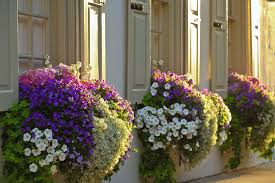
Window boxes need no introduction. Picture the classic eye-catcher: a narrow box painted perfectly to match the house trim, abundantly spilling forth ivy geraniums, pansies, and petunias. You can come across plenty of these old-fashioned favorites embellishing gingerbread houses or jazzing up everything from a ranch-style home to a city flat.

Window boxes, of course, are just containers attached to the house. They're easy to plant. Here are some key points to keep in mind to help you choose, plant, and care for a window box:

  • Select a style that matches your house. Treated softwood or hardwood boxes are easy to paint or stain to blend in beautifully with their surroundings. Plastic, metal, terra-cotta, or concrete boxes can work too, but are harder work with.
  • Pay attention to size. A window box looks best if its length is within a couple of inches of the size of the window, although slight differences — long or short — won't hurt. Plants need room to grow and soil that doesn't dry out too fast — boxes should be at least 8 inches wide to provide room for top growth and 8 inches deep for the roots.
  • Make your own box if your window is oddly sized. Use 1-inch boards and simple joinery with waterproof glue and galvanized or brass screws to secure the pieces. Drill several drain holes along the bottom.
  • Go for a sunny exposure to please the most plants. This, though, increases your watering chores. Remember that some window boxes are protected from rains, so you need to check regularly for dryness. Don't worry if there's shade. Many excellent shade plants thrive in partial or full shade.

Position the box below the window by a few inches. If you happen to have a window that opens outward, you have to lower the box. Use steel brackets every 18 inches or so and fasten them into the siding or masonry with the proper screws. Rest the box on the supports and screw the bottom to the brackets. Always mount the box before you plant.

Planting and caring for your window box

You have three options for planting your window box:

  • Plant directly in the container.
  • Drop in potted plants and fill around them with moss, bark, or another lightweight material.
  • Put plants in a plastic or metal liner that fits inside the box. With this method, you can rotate liners and add fresh plants when current plantings pass their prime.

Basically, you plant the same way you do in any container. Cover the drain holes, fill with soil mixture, and firm soil around plants, leaving at least 1 inch at the top for watering. Use routine good care on the window box, starting with regular watering, feeding with a liquid fertilizer, and grooming to remove faded flowers and leaves.

Picking the (plant) winners

Choosing a container and a location is a fine start for window box gardening, but picking the right plants really makes the difference in your growing success. Generally, select a mixture of trailers, compactupright plants that grow tall enough to be seen without blocking the window, filler plants, and bulbs.

For a dramatic display, choose plants that contrast with the background — bright plants against light siding or wood, pale flowers against dark brick walls. Here's a brief rundown of the top 12 plants — both annuals and permanent ones — for window box culture. But remember that this list is intended only to get you started; your plant choices are many and varied for dynamic window boxes.

Annuals

  • Sweet alyssum: Stalwart, reliable, fragrant trailer in white, cream, pink, and purple. Alyssum is exceptionally easy to grow and fills in beautifully, often reseeding itself.
  • Lobelia: Sound familiar? Yes, we often call on this little annual with clouds of cascading color in white, sky blue, dark blue, rose, lavender, and cobalt. Simply great in window boxes.
  • Pansies: Perfect in any box, pansies offer prolific color in many hues and quickly fill gaps between permanent plants or other annuals, offering long-lasting color.
  • Petunias: Choose these when you want a stunning summer box that shines in the sun. Try cascading varieties, as well as multifloras, for an abundance of blooms in a wide range of colors.
  • Impatiens: The plant for shade, and awesome in window boxes — especially valuable for continuous color in a range of hues. Use low-growing, dwarf varieties. New Guinea hybrids also offer excellent foliage.
  • Dianthus: You get the bonus of fragrance with the gift of color. Plants are well behaved. If all goes well, a breeze blows, sending sweet scents through your open windows.

Permanent plants

  • Ivy geranium: Yep. The selfsame winner in hanging baskets, this one also works really well in window boxes, gracing us with wonderful trailing stems covered with bright flowers. In cold climates, grow it as an annual.
  • Geraniums: Bedding geraniums are the classic window box plant — grown for clusters of brilliant flowers in colors ranging from white to crimson to apple blossom pink. Plants are easy to grow. Consider geraniums an annual in cold climates.
  • Dwarf bulbs: Forgive us for lumping so many bulbs together, but the miniature nature of many flowering bulbs — daffodils, crocus, grape hyacinth, cyclamen — makes them ideal players in the window box.
  • Ground ivy: Impressive long stems spill from your window box in shimmering green or variegated tones. Ground ivy can survive through winter in milder climates.
  • English ivy: Hardy, versatile, attractive, and useful for any box where you want trailing plants, ivy handles in sun or shade. For extra color, choose varieties with cream or yellow accents on the leaves.
  • Miniature roses: You have dozens to choose from, and each one can be trusted to perform elegantly and effectively in combinations with annuals or other permanent plants. Some varieties also offer fragrance.

The meaning of Mothers Day around the globe

Sean MurphyComment

Did you know that Mother’s Day is now celebrated worldwide? Here are some interesting facts on how other countries celebrate it:

Argentina. It is customary to honor mothers with dinners, poems and special gestures of attention. Children write letters in school or make cards and crafts to take home. Husbands cook and clean and look after the family, allowing the mother to relax and enjoy the day. Moms are almost certain to receive flowers, cards, candy, jewelry or an unexpected surprise.

France. Inspired by American soldiers in World War I, France celebrated Mother’s Day first in 1918. The Minister of the Interior created the official day in 1920, declaring December 19 La Fete de Meres, Mothers’ Day. The focus then was on the re-population of France following the high rate of attrition from WWI (known in France as the Great War). Mothers with four or five children were awarded a bronze medal; those with six or seven children would receive a silver medal, and eight or more offspring garnered the gold. This tradition was abandoned when a more modern version of Mother’s Day came from the Vichy government, which on May 25, 1945, instituted the National Day of Mothers. Today, a common gift is a cake shaped to resemble a bouquet of flowers, along with candies, flowers, cards and perfumes.

India. A westernized version of Mother’s Day is officially observed on May 10, though cities and cultural centers tend to celebrate it more than the smaller settlements. On this day, mothers receive flowers, a prepared meal, cards or a phone call.

Apart from the modern version of Mother’s Day, Hindus have long celebrated a multi-day festival in October called Durga Puja. As the ancient Greeks honored their earth goddess, the Hindu holiday praises their divine mother, Durga. This ancient festival has evolved into one of the biggest events in India. Families spend weeks preparing food and gifts for friends, and cleaning and decorating their houses for parties.

Mexico. In 1922, a journalist Rafael Alducín wrote an article advocating the celebration of Mother’s Day in Mexico. Though the practice had already spread to parts of Mexico, Alducín’s article led to widespread observance of the holiday, and May 10 is now the universal day of celebration of “Dia de las Madres.” Celebrations include starting the morning with a song sung to the mother in the morning, followed by a family breakfast or brunch. Typically, mothers will receive flowers, chocolates, or sentimental cards (May 10 is the largest day for sending cards in Mexico).

United Kingdom. Like the rest of Europe, England and Ireland observed the mid-Lent holiday and honored and decorated their “Mother Church,” the church where they were baptized. The church eventually extended the observation to honor all mothers. The English called this Mothering Sunday and, in the 1700s they observed it by taking a break from the fasting and penitence of Lent and having a family feast. Mothering Sunday fell out of practice in the early 1900s, but the tradition was reinstated after the end of WWII, inspired largely by the United States. Today the UK’s Mother’s Day continues in much the same way as the old tradition, with cards and dinners in honor of Mom.

Canada. Canada was one of the first nations to pick up the U.S. version of Mother’s Day, making it a national holiday in 1909. The customs largely reflect those of its southern neighbor, although in Canada there seems to be an added emphasis on doing chores for the mother and cooking her supper.

China. While China’s Mother’s Day is based primarily on the practices of the United States, it is interesting to note that most Chinese names begin with a character signifying mother in honor of one’s maternal heritage.

Denmark. In Denmark, dining out to lunch is a popular Mother’s Day pastime. The day is called Mors Dag.

Ethiopia. Mother’s Day in Ethiopia occurs in mid-fall when the rainy season ends. Called “Antrosht,” Ethiopians celebrate by making their way home when the weather clears for a large celebration. For the feast, the children bring ingredients for a traditional hash recipe, which the mother prepares. After the meal, the mothers and daughters ritually anoint themselves with butter and dance, while the men sing songs in honor of family and heroes. This cycle of feasting and celebration lasts two or three days.

Italy. The Italians celebrate La Festa della Mamma with a big feast and a cake made in the shape of a heart. Typically, Italian schoolchildren will make something to bring home to their mothers, and the family will take care of the chores for the day.

Singapore. Singapore’s Mother’s Day places a heavy emphasis giving gifts, including spa packages, vacuums, hampers, jewelry and flowers.

Sweden. Sweden’s Mother’s Day, which takes place on the last Sunday in May, has a strong charitable focus: the Swedish Red Cross sells small plastic flowers leading up to the holiday, and the proceeds raised are given to poor mothers and their children.

Maybe some of these other traditions will inspire you. I for one know that my mom loves hydrangeas, and I won’t stray from our tradition of a huge vase of hydrangeas anytime soon. She deserves it.


The color for Spring 2015 is...

Sean MurphyComment

I hope everyone is as big a fan of blue as we are! Because according to the color masterminds at Pantone... who each season hunt down what colors are being used in the design world—have declared that Aquamarine, Scuba and Classic Blue will all be THE hot colors for Spring 2015. Additional complimentary shades to note are; Custard, Lucite Green and Marsala. Overall, it’s interesting that the palette’s are not partial to the typical spring pastels; there are a handful of deeper, richer and bolder colors in the mix. I suppose after the past fall and especially this past winter with the pastel pallet domination, we  have been itching for richer and stronger color tones for this spring. We always take into consideration color trends when compiling floral and arranging our seasonal collections. As you can see we have designed numerous arrangements with hues of blues in our collection, check them out!

Floral Arrangement Care Tips

Sean Murphy1 Comment

Educating our customers on proper care of fresh cut flowers is very important to us. Whether bring home loose fresh flowers to be arranged or receiving a flower arrangement from us, it all comes down to proper care. Our fresh cut arrangements leave the store with a floral care card to go over the basics of floral care. We also offer these care cards for our orchids, succulents and various other plants.

Step 1: Flowers drink a lot of water!  We recommend refilling the water every two days, its not uncommon to even need water everyday, so be sure and check the water level every evening.  Just like food, flowers are highly susceptible to bacteria that builds up in the water and flower stems. Changing the water completely every couple of days will prevent bacteria build up, reduce any odor omitting from the arrangement, and help with the longevity of the flowers.

Step 2: When changing the water, cutting the flowers stems should go hand in hand.  We recommend a new cut just above the original cut with a serrated knife (please use caution!); make a long cut and work your way down to the top of the original cut. Avoid using scissors to cut your the flowers; as scissors crush the stem, thus smashing and damaging the tissue cells at the end of the stem. Damaged cells cannot absorb water as effectively as healthy cells. A knife ensures a clean cut that doesn't damage the cells. 

Step 3:  Keep the flowers away from heaters, air conditioners and direct sunlight. People equate plants and flowers in the same category and insist on giving the flowers light, most plants need sun to survive however this is not the case for fresh cut flowers. Sun and heat will encourage them to mature and thus quicken their demise. Instead, keep your cut flowers in a cool area of your home to enjoy them as long as possible!